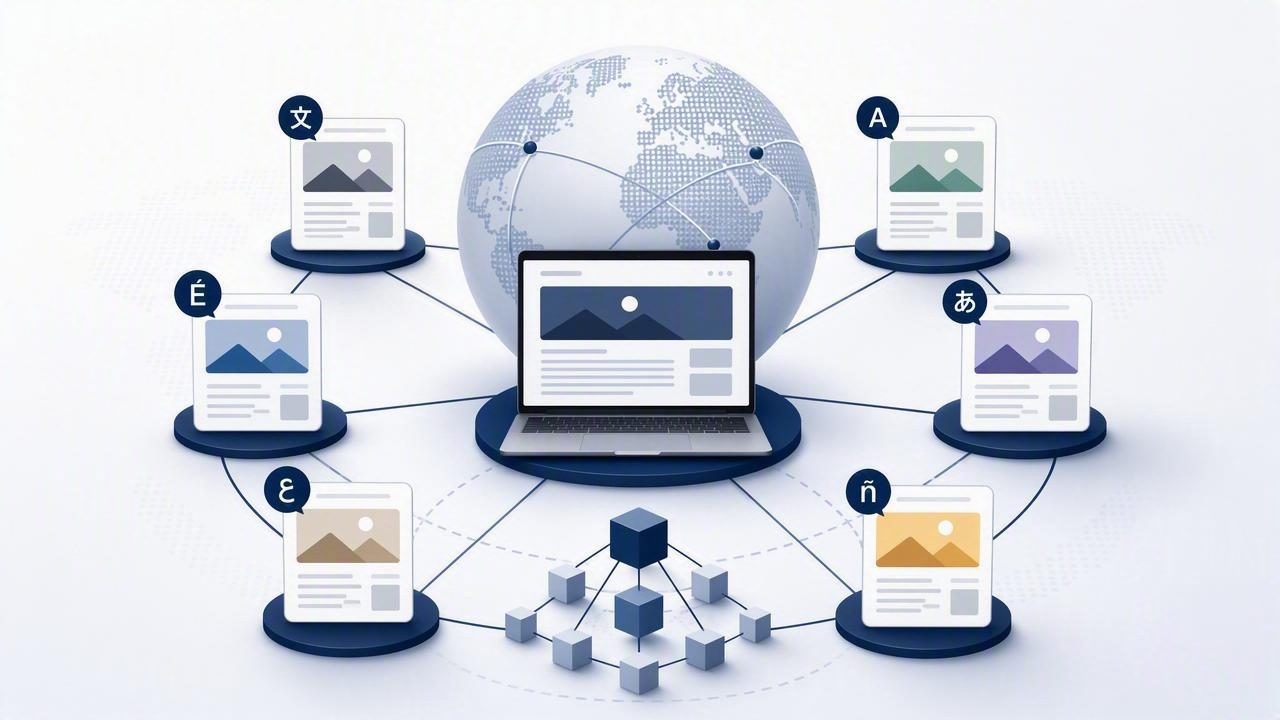
Finding the best multilingual blogging platform to create connected content clusters is not simply a matter of selecting a tool that translates articles. For sustainable international SEO growth, businesses need a system that can plan related topics, publish consistently, connect pages logically, and preserve quality across every target language.
Content clusters help search engines understand what your website is about. Multilingual publishing helps your business become useful and visible to audiences in more than one market. Combined, they can turn a blog from a collection of isolated posts into a structured knowledge hub that earns relevant organic traffic over time.
This guide explains what connected multilingual content clusters are, why they matter, which platform capabilities to prioritize, and how to build a practical workflow that scales without producing repetitive or poorly localized content.
What Are Connected Content Clusters?
A content cluster is a group of closely related pages organized around a broad subject. Usually, a comprehensive pillar page targets the main topic, while supporting articles answer narrower questions, cover subtopics, and link back to the pillar page. The supporting pages should also link to each other when the connection is genuinely helpful to readers.
For example, a software company might build a cluster around email marketing automation:
- Pillar page: Email Marketing Automation Guide
- Supporting post: How to Segment an Email List
- Supporting post: Automated Welcome Email Examples
- Supporting post: Email Automation Metrics to Track
- Supporting post: How to Choose an Email Automation Tool
A multilingual cluster applies this logic across language versions. Rather than publishing one translated pillar page and leaving it unsupported, the business creates a connected set of localized resources for each relevant market. This approach strengthens topical coverage while making it easier for users to continue their research in their preferred language.
Why Multilingual Content Clusters Matter for SEO
Search engines aim to deliver the most useful result for a search query. A site with clear topic relationships, relevant internal links, and well-localized pages gives stronger signals of usefulness than a site with disconnected articles.
Connected clusters can support SEO in several ways:
- Topical authority: Thorough coverage of a subject demonstrates depth and relevance.
- Better crawlability: Internal links help search engines discover and understand related pages.
- Improved user journeys: Readers can move naturally from broad questions to detailed answers.
- More keyword coverage: Each supporting article can address a different search intent or long-tail query.
- Market-specific relevance: Localization allows topics, terminology, examples, and calls to action to match local expectations.
Translation expands reach, but localization creates relevance. A successful multilingual content strategy does both.
It is also important to recognize that keywords do not map perfectly from one language to another. A term that receives substantial search volume in English may be phrased differently, carry a different intent, or have no demand in another market. The right platform should support localized keyword research instead of treating every language as a direct copy of the original.
Essential Features of a Multilingual Blogging Platform
When comparing platforms, look beyond the writing interface. The best option for multilingual content clusters should support the complete process: research, planning, creation, publishing, optimization, and measurement.
| Platform capability | Why it matters for content clusters |
|---|---|
| Localized keyword research | Helps identify real opportunities and search intent in each target market. |
| Topic planning tools | Makes it easier to organize pillar pages and supporting articles before publishing. |
| Multilingual content creation | Supports consistent production across languages without duplicating manual effort. |
| Internal linking support | Creates meaningful connections between pages and reinforces cluster architecture. |
| Hreflang management | Helps search engines serve the appropriate language or regional page. |
| Publishing automation | Maintains a reliable publishing schedule as the number of languages increases. |
| Editing and quality controls | Reduces factual errors, awkward phrasing, and off-brand content. |
| Performance reporting | Shows which clusters, languages, and pages deserve further investment. |
Start With Market and Search Intent Research
Before creating any articles, decide where multilingual content can make a meaningful business impact. Consider existing customer locations, international traffic patterns, product availability, customer support capacity, and local competition. It is usually better to build strong coverage in two or three high-potential languages than to publish thin content in dozens of markets.
Next, research how audiences search in each language. Create a keyword map that includes:
- The primary topic and pillar-page keyword.
- Informational, commercial, and transactional supporting queries.
- Questions users ask before and after purchasing.
- Local terms, spelling variants, and industry vocabulary.
- Search intent, likely content format, and target URL for every keyword.
For instance, a query may require a practical tutorial in one market but a product comparison in another. Copying an identical article structure across every language can miss these differences. The goal is connected content that solves the actual problem behind each local search.
Build a Cluster Map Before You Publish
A cluster map prevents content from becoming random. It identifies the purpose of every page, the keywords it targets, and the internal links that should connect it to the rest of the site.
A simple planning structure might look like this:
Pillar: Sustainable Home Energy Solutions
├── Solar Panel Cost Guide
├── Home Battery Storage Explained
├── Heat Pump vs. Gas Heating
├── Government Energy Incentives
└── How to Reduce Household Energy Use
For each language, review whether all of these topics remain relevant. A government incentives article, for example, should be country-specific rather than translated word for word. A German version may need different regulations and examples from a Spanish or French version.
Assign one primary intent to each page to reduce keyword cannibalization. If two posts target nearly identical phrases and provide the same answer, consolidate them or differentiate their angle. Clear page roles make both writing and internal linking more effective.
Create Content That Is Localized, Not Mechanically Rewritten
Automation and AI can accelerate multilingual content production, but they should operate within a quality-first process. Strong content needs a clear brief, credible source material, practical examples, and editorial review rules.
For every article, define:
- The target audience and the question they need answered.
- The primary keyword and closely related terms.
- The article’s relationship to the pillar page.
- Relevant internal links to include naturally.
- Local examples, currencies, regulations, units, or terminology to adapt.
- A clear next step for readers once they finish the article.
When using AI-powered blogging tools, provide enough context to avoid generic output. A brief should explain the brand voice, audience knowledge level, product category, factual boundaries, and localization requirements. AI can then help create efficient first drafts, metadata, outlines, and content variations, while human review protects accuracy and relevance.
Use Internal Links to Make the Cluster Work
Internal linking is what turns a set of articles into a connected cluster. Every supporting post should generally link to its pillar page using natural, descriptive anchor text. Pillar pages should link to their most important supporting resources. Related supporting articles can link to one another when doing so helps the reader continue learning.
Follow these practical guidelines:
- Link where the destination page adds context or solves the next logical question.
- Use descriptive anchors rather than repetitive phrases such as click here.
- Avoid forcing a high number of links into every paragraph.
- Keep links within the same language whenever possible.
- Use language-switching links separately from topical internal links.
- Review links regularly when articles are updated, moved, or removed.
Do not assume that a translated page is automatically the best internal link. Link to the resource that best matches the reader’s language, location, and stage of research.
Get Technical Multilingual SEO Right
Content quality and cluster structure need technical support. A multilingual blogging platform should make it straightforward to create indexable, well-organized language versions. Common URL structures include subdirectories such as example.com/fr/, subdomains such as fr.example.com, or country-code domains. Subdirectories are often easier to manage, but the best choice depends on your brand, markets, and technical setup.
Use hreflang annotations so search engines can understand equivalent language and regional pages. Each version should reference itself and its alternate versions accurately. Include an x-default page when appropriate for users outside your specified language targets.
Also verify that localized pages have unique title tags, meta descriptions, headings, image alt text, and schema details where relevant. Never rely on automatic translation alone for sensitive fields such as legal guidance, pricing, medical information, or regulated claims.
Measure Cluster Performance and Improve It
Publishing is only the beginning. Track performance by language, topic cluster, page type, and search intent. Look for patterns instead of judging success solely on the traffic of one post.
Useful metrics include organic impressions, clicks, rankings, indexed pages, engagement signals, internal-link clicks, conversions, and assisted conversions. If a pillar page earns impressions but few clicks, improve its title tag and meta description. If supporting articles rank but do not lead users deeper into the site, strengthen their internal links and calls to action.
Set a recurring content review cycle. Update statistics, add missing subtopics, replace outdated links, and refresh localization when market conditions change. Clusters become more valuable when they are maintained as living resources rather than published once and forgotten.
Choose a Platform That Supports a Repeatable System
The best multilingual blogging platform is one that fits your operating model. Small teams may prioritize automation and managed publishing. Larger organizations may need deeper editorial workflows, integrations, user permissions, or custom technical controls. In either case, choose a platform that helps your team build a consistent process rather than merely generate more pages.
Look for a solution that combines keyword discovery, content planning, multilingual creation, SEO-friendly publishing, and reliable quality checks. A hands-free blogging solution such as the24blog can be useful for teams that want to automate recurring content operations while keeping their strategy centered on helpful, connected content.
Ultimately, global SEO growth comes from publishing the right pages for the right audiences and making their relationships clear. Build clusters around real customer questions, localize them thoughtfully, connect them with purposeful links, and improve them over time. That is how multilingual blogging becomes a durable source of visibility and trust.