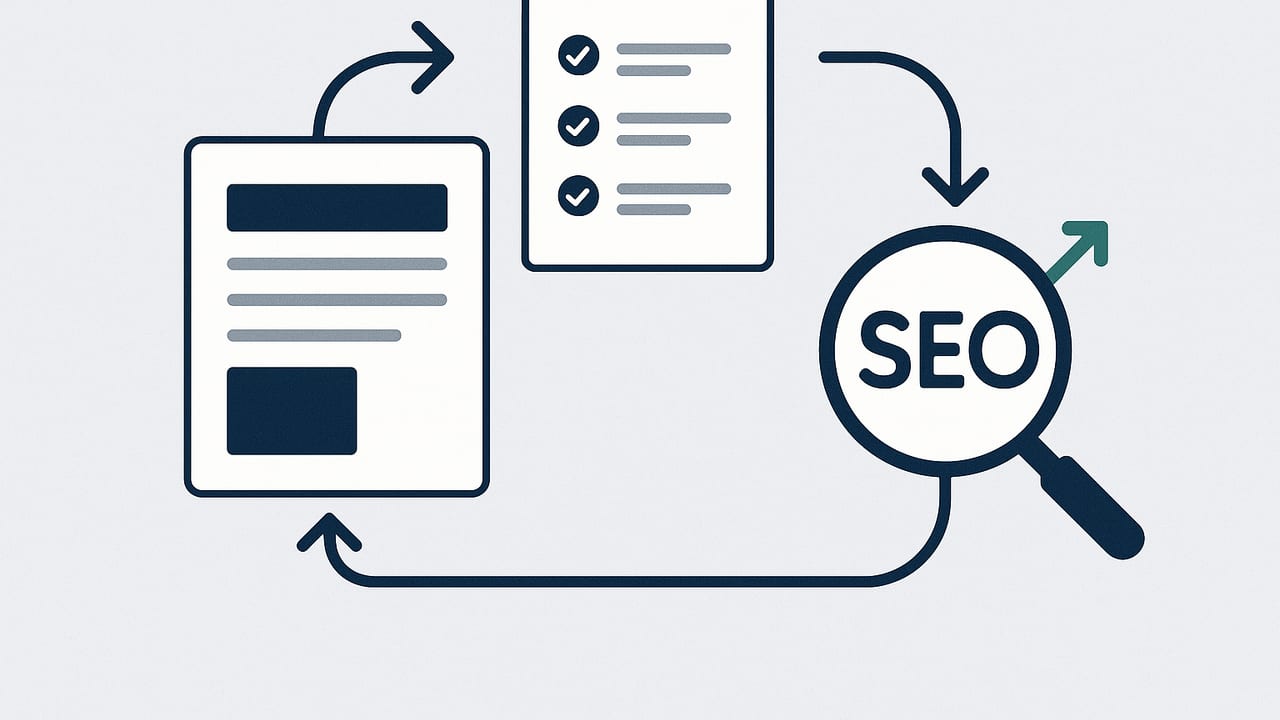
Daily blog publishing can be a growth flywheel—if you structure it with the right systems. When you publish every day, you compound topical authority, capture long-tail queries faster, and tighten feedback loops between research, writing, and SEO. But a daily cadence without governance often leads to thin content, keyword cannibalization, and wasted crawl budget. This guide shows you how to ship high-quality posts every day with reliable workflows, automation, and measurable SEO wins.
Why Daily Blog Publishing Works (When Done Well)
- Freshness and breadth: Daily articles help you cover long-tail and mid-tail keywords that collectively drive steady traffic.
- Topical authority: Consistent coverage signals depth to search engines and accelerates rankings for core themes.
- Faster learning: More posts mean quicker data on CTR, engagement, and conversion, enabling rapid iteration.
- Compounding internal links: Each post becomes a new internal link source, strengthening pillar pages over time.
Consistency compounds. The real advantage of daily blog publishing is not one post—it’s the momentum and data you gain from hundreds of small, correct decisions.
Build an Editorial System That Ships Daily
A sustainable daily program is a repeatable assembly line with clear stages, roles, and quality gates. Here’s a practical framework you can adapt to your team size and tool stack.
- Topic mapping & keyword planning: Define pillars (evergreen clusters) and supporting spokes. Group keywords by search intent, difficulty, and business value.
- Brief creation: For each post, create a brief with target query, SERP analysis, outline, internal links, and schema needs.
- Drafting: Write for clarity and usefulness, then layer in examples, visuals, and proprietary insights.
- On-page SEO: Optimize titles, H2/H3 structure, meta data, internal links, and media alt text. Add schema.
- Editorial QA: Fact-check, update sources, check tone/voice, and run plagiarism and grammar checks.
- Publish & distribute: Schedule, submit sitemap, and syndicate to email and social.
- Post-publication QA: Validate indexing, fix coverage issues, add cross-links from existing articles.
Roles and Timeboxing for Daily Cadence
| Role | Daily Responsibilities | Timebox | Quality Gate |
|---|---|---|---|
| SEO Strategist | Keyword queue, briefs, internal link map | 60–90 min | Search intent verified; cannibalization check |
| Writer | Draft 1 post; integrate examples and data | 2–3 hrs | Meets brief; covers SERP gaps |
| Editor | Fact-check, tone, structure, readability | 45–60 min | Style and accuracy pass |
| SEO QA | Metadata, schema, internal links, images | 30–45 min | All checks green; no index conflicts |
| Publisher | Schedule, sitemap ping, social/email | 15–30 min | Live URL tested; analytics annotations |
SEO Checklist for Every Daily Post
Use this repeatable checklist to maintain quality at speed.
- Search intent: Satisfy the dominant intent on the first screen with a clear answer or value proposition.
- Title & meta: Front-load the primary keyword, include a benefit, and stay within pixel limits.
- Headers: Logical H2/H3 outline; include semantically related terms (entities) naturally.
- Internal links: At least 3–5 links to relevant articles and 1–2 links back to pillar pages with descriptive anchors.
- Images & media: Compress images, add descriptive alt text, and use web-friendly formats.
- Schema: Add BlogPosting, ImageObject, or FAQPage JSON-LD where relevant.
- Readability: Short paragraphs, scannable lists, and examples that answer real user questions.
- EEAT signals: Author bio, source citations, dates, and proprietary insights or data.
- Indexation: Ensure canonical tags are correct; avoid noindex unless intentional; submit updated sitemap.
Automate the Boring Parts (Safely)
Automation keeps daily blog publishing predictable. Automate handoffs, checks, and status updates, but keep human review for intent, facts, and brand voice.
Example: Lightweight Daily Publish Workflow
# .github/workflows/daily-publish.yml
name: Daily Publish
on:
  schedule:
    - cron: '0 7 * * *'  # Run daily at 07:00 UTC
jobs:
  publish:
    runs-on: ubuntu-latest
    steps:
      - name: Checkout
        uses: actions/checkout@v4
      - name: Validate briefs
        run: node scripts/validate-briefs.js  # checks intent, links, schema flags
      - name: Generate post
        run: node scripts/generate-post.js --queue ./queue/today.json
      - name: SEO lint
        run: node scripts/seo-lint.js  # title pixels, headings, images, internal links
      - name: Publish to CMS
        run: node scripts/publish.js --cms blog --auth $CMS_TOKEN
      - name: Ping search engines
        run: |
          curl "https://www.google.com/ping?sitemap=https://example.com/sitemap.xml"
          curl "https://www.bing.com/ping?sitemap=https://example.com/sitemap.xml"
Starter BlogPosting Schema
<script type="application/ld+json">
{
  "@context": "https://schema.org",
  "@type": "BlogPosting",
  "headline": "Daily Blog Publishing Strategy: Systems, QA, and SEO",
  "author": {"@type": "Person", "name": "Your Name"},
  "datePublished": "2024-08-01",
  "image": ["https://example.com/images/post.jpg"],
  "mainEntityOfPage": {"@type": "WebPage", "@id": "https://example.com/post"},
  "description": "A practical playbook for daily blog publishing with workflows, QA, and SEO."
}
</script>
Integrate automation with guardrails: require a human approval step before publishing, log every change, and run link validation to avoid 404s.
Internal Linking: Make Daily Posts Work for Your Pillars
Daily articles should strengthen your core pages, not compete with them.
- Cluster map: For each pillar, maintain a list of target spokes. Every new post links to the pillar with consistent, descriptive anchors.
- Daily quotas: Add 3+ outbound internal links and update 1–2 older posts to include links back to the new article.
- Navigation aids: Add "related reading" blocks and breadcrumbs to surface more content.
A 7-Step Daily Blog Publishing Routine
- Pick from the queue: Select the highest-priority brief based on business value and seasonality.
- Review SERP: Recheck top results and PAA questions; adjust outline to address gaps.
- Draft with examples: Include step-by-step instructions, screenshots, or small datasets.
- Optimize: Title, metas, headers, internal links, FAQs, schema, alt text.
- QA: Fact-check; run grammar, originality, and link checkers; confirm reading level.
- Publish & ping: Schedule at a consistent time; submit sitemap and URL if needed.
- Annotate analytics: Add notes to your analytics platform for each post to correlate changes with outcomes.
Metrics That Matter for a Daily Cadence
Measure leading indicators daily; track outcomes weekly and monthly.
| Cadence | Metric | Target/Use |
|---|---|---|
| Daily | Publishing consistency | 1 post/day; misses trigger a retro |
| Daily | Technical QA pass rate | >95% pass before publish |
| Weekly | Clicks & impressions (GSC) | Growth vs prior week; new queries count |
| Weekly | Index coverage | <2% errors; troubleshoot crawl anomalies |
| Monthly | Topical authority signals | More ranks in top 10 across core clusters |
| Quarterly | Assisted conversions | Content’s impact on pipeline/revenue |
Common Pitfalls (and Safeguards)
- Thin content: Guard with minimum depth standards (e.g., 800–1,200 words where intent merits) and unique examples.
- Keyword cannibalization: Maintain a canonical keyword map; audit SERPs to decide whether to merge or differentiate posts.
- Index bloat: Noindex low-value pages (tags, thin archives) and keep sitemaps clean.
- AI hallucinations: Require source citations and human fact-checking, especially for YMYL topics.
- Brand voice drift: Enforce a style guide; use prompt libraries or checklists to keep tone consistent.
- Image licensing: Track sources and licenses; prefer original or generated images with clear rights.
Content Brief Template (Copy, Customize, Reuse)
Title: {Working title with benefit}
Primary Keyword: {Exact target query}
Secondary Keywords/Entities: {List}
Search Intent: {Informational/Transactional/Comparison}
Reader Profile: {Role, pain, goal}
Outline:
  - H1: {Title}
  - H2: {Section 1}
  - H2: {Section 2}
  - H3: {Subtopic}
Examples/Data: {Stats, screenshots, quotes}
Internal Links (Add): {3–5 URLs + anchor text}
Internal Links (Update): {Older URLs to add link to this post}
Schema: {BlogPosting, FAQPage, HowTo}
CTA: {Soft call to action}
QA Checks: {Fact-check, originality, tone, images, accessibility}
Accessibility and Performance at Scale
Performance and accessibility are silent ranking and UX helpers—critical when you add pages daily.
- Core Web Vitals: Compress images, implement lazy loading, minimize CLS with reserved image dimensions, and preconnect critical domains.
- Accessibility: Semantic headings, descriptive link text, color contrast, and keyboard navigation for interactive components.
- Multimedia: Provide captions or transcripts; use alt text that informs, not keyword-stuffs.
Planning for Multilingual or Multi-Region Publishing
If your daily blog publishing spans languages or regions, set rules early to avoid duplication and hreflang errors.
- Hreflang: Implement hreflang for each language/region pair; keep canonical tags self-referential per locale.
- Localized examples: Adapt screenshots, currency, measurements, and case studies to each market.
- Source-of-truth briefs: Create a master brief and translate with context notes for idioms and brand voice.
Governance: Keep Quality High as Volume Grows
Daily blog publishing thrives on governance, not heroics.
- Definition of Done: A clear checklist that must be green before publish.
- Weekly retro: Review misses, SERP changes, and update the keyword queue.
- Content lifecycle: Add refresh dates to each post and tag candidates for consolidation.
- Audit schedule: Quarterly content audit for internal link gaps, decayed posts, and duplicate targets.
Putting It All Together
Start with a focused topic cluster, build a repeatable brief-to-publish pipeline, automate non-creative steps, and measure relentlessly. Daily blog publishing isn’t about speed for its own sake—it’s about building a durable system that compounds authority and traffic while protecting quality and brand trust. If you prefer a hosted, hands-free approach to daily, multilingual content, platforms like the24blog can automate research, creation, and publishing while keeping your cadence and SEO intact.