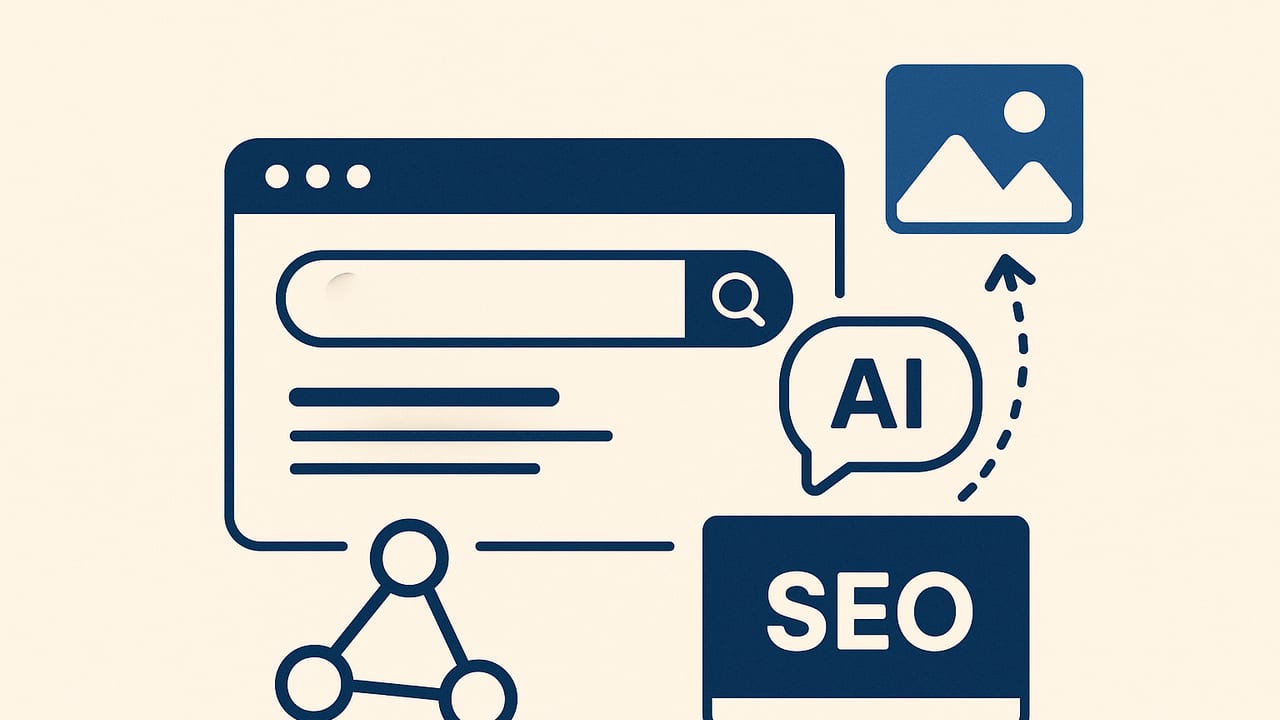
The future of SEO is arriving faster than most teams expect. Search is evolving from ten blue links to AI-generated answers, from keyword matching to entity understanding, and from text-only pages to rich, multimodal experiences. Winning visibility now demands a blend of semantic strategy, technical rigor, and content that readers and machines can trust. This guide unpacks what changes, what stays, and how to build an SEO program that thrives as algorithms and user behavior shift.
The search landscape is fragmenting
Search is no longer a single destination. Users find answers across classic web search, AI assistants, social feeds, marketplaces, app stores, and even on-device models. Assistants synthesize responses, cite a handful of sources, and increasingly compress the user journey into zero- or one-click tasks. That means the competition is not just other websites; it is answer engines themselves, knowledge panels, videos, and shopping carousels.
Your opportunity: optimize for discovery everywhere users ask questions. Think in terms of entities, context, and formats rather than just queries and positions. If your content is structured, authoritative, and multimodal, you can surface in AI answers, visual panels, voice results, and traditional SERPs.
Great SEO aligns what people want, what your brand knows best, and how machines understand the world.
Eight shifts defining the future of SEO
- Answer engines over link lists: AI overviews and assistants summarize results, prefer clear explanations, and cite sources that are easy to parse and trustworthy.
- Entity-first indexing: Search systems map topics to entities (people, places, products) and relationships, rewarding content that clarifies identity, context, and connections.
- Multimodal relevance: Images, charts, video, and audio increasingly influence visibility. Alt text, captions, and transcripts are as important as headlines.
- Experience as a ranking amplifier: Page speed, interaction stability, and readable design are table stakes; superior UX magnifies engagement signals and links.
- First-party data and provenance: Models prefer content with verifiable authorship, sources, and update trails. Authenticity markers and citations matter.
- Automation with editorial oversight: Scalable research, generation, and refresh pipelines outperform manual-only teams, but human editing remains essential for accuracy and tone.
- International and local nuance: Language, culture, and local intent require tailored pages, proper hreflang, and region-specific entities and examples.
- Holistic measurement: Beyond rank, track share of answers, citation frequency in AI summaries, engaged time, and conversion per impression.
A modern strategy stack for the future of SEO
Winning teams combine semantic clarity, content depth, and technical precision. Use this stack to organize efforts:
- Audience and intent: Model core problems users try to solve. Map intents from exploratory to transactional and plan content across the journey.
- Entity modeling: Define your brand, products, authors, and key topics as entities. Clarify relationships using schema, internal linking, and consistent naming.
- Authoritativeness: Demonstrate experience and credibility with bylines, bios, references, data, and expert quotes. Align with E-E-A-T principles.
- Structure and metadata: Use JSON-LD, clean headings, summaries, captions, TOCs, and canonical signals so crawlers and LLMs can extract meaning.
- Multimodal storytelling: Pair text with graphics, examples, short clips, and code blocks to increase utility and coverage across result types.
- Continuous improvement: Refresh top content, prune thin pages, and maintain a change log to signal freshness and reliability.
A practical playbook you can run
1) Research: entity-led discovery
- List the core entities in your domain (brand, products, concepts, people) and their synonyms.
- Mine SERPs, AI overviews, and knowledge panels for related entities and attributes.
- Cluster queries by task and entity, not just keywords. Build topic hubs that anchor to entities.
2) Content: human expertise with AI acceleration
- Draft briefs that state user intent, primary entity, supporting facts, data sources, and the unique take.
- Use AI to propose outlines, examples, and FAQs, then edit for accuracy, voice, and depth.
- Include citations, original visuals, and practical steps. End with quick summaries or checklists.
3) Technical SEO: structure your data
Implement JSON-LD so search engines and assistants can confidently parse your pages. A minimal Article schema might look like this:
<script type='application/ld+json'>
{
  "@context": "https://schema.org",
  "@type": "Article",
  "headline": "Future of SEO: From Entities to AI Answers and Multimodal Search",
  "description": "An actionable guide to entity-first strategy, AI summaries, and multimodal optimization.",
  "author": {
    "@type": "Person",
    "name": "Your Name",
    "sameAs": [
      "https://www.linkedin.com/in/your-profile",
      "https://your-site.com/about"
    ]
  },
  "about": [
    { "@type": "Thing", "name": "Search engine optimization" },
    { "@type": "Thing", "name": "Entity SEO" }
  ],
  "datePublished": "2025-01-01",
  "image": "https://your-site.com/images/future-seo-cover.jpg"
}
</script>
Augment with BreadcrumbList, FAQPage, VideoObject, or Product as appropriate. Validate with schema testing tools and monitor for warnings after deploys.
4) Multimodal optimization
- Images: compress, add descriptive alt text, include width/height, and submit image sitemaps.
- Video: provide transcripts, chapters, and a VideoObject JSON-LD; host a short preview clip if using long-form.
- Audio: supply show notes and timestamps; include a summary paragraph for answer engines.
- Charts/code: prefer accessible SVG or text-based code blocks; caption with takeaways.
5) Measurement: track beyond blue links
- Answer share: Percentage of priority queries where you’re cited in AI summaries or featured snippets.
- Entity coverage: Number of target entities with a strong, ranking pillar page and supporting content.
- Engaged time: Adjusted for scrolldepth and tab focus, not just session duration.
- Refresh impact: Traffic and conversion lifts within 30 days of updates or republishing.
Old vs. new SEO at a glance
| Yesterday | Future-ready |
|---|---|
| Keyword lists | Entity maps and task clusters |
| Static pages | Living content with refresh cadence |
| Blue links | Answers, panels, and multimodal assets |
| Backlinks volume | Trusted citations and expert references |
| Manual workflows | Automated pipelines with human QA |
| One language | Multilingual, localized intent coverage |
Technical checklist to future-proof your site
- Adopt JSON-LD for articles, products, videos, and breadcrumbs; keep it in sync with visible content.
- Ship image and video sitemaps; include lastmod to signal freshness.
- Implement hreflang for regional variants and verify return tags.
- Consolidate duplicates with canonicals; stabilize URL patterns and parameters.
- Optimize Core Web Vitals: CLS under control, fast LCP, responsive TTFB.
- Publish changelogs and bylines to strengthen provenance and E-E-A-T signals.
- Use descriptive filenames and alt text; prefer vector-friendly formats for diagrams.
- Provide clear robots directives and a clean crawl path; reduce thin or orphan pages.
Content governance, ethics, and risk
AI-assisted production raises questions of accuracy, attribution, and user trust. Institute guidelines for source quality, fact-checking, and update cadence. Label significant AI assistance when appropriate, manage user-generated content with moderation and clear policies, and protect privacy with consent-aware analytics. If you adopt content credentials or similar provenance standards, document your practice and include visible signals for readers.
Five predictions for the next 24 months
- Answer visibility becomes a KPI: Teams report share of citations in AI summaries alongside classic rankings.
- Entity SEO toolchains mature: Workflows integrate entity graphs, schema coverage, and relationship validation.
- Multimodal snippets expand: Short clips, step images, and charts appear more often in high-intent results.
- Freshness weighting rises: Systems favor current, maintained pages with clear update histories.
- Localization deepens: Engines reward regionally relevant examples, prices, and regulations on otherwise global pages.
Examples to apply this week
- Pick one cornerstone topic. Audit the SERP for entities, questions, and formats. Add a summary, FAQ, and a diagram; wire in Article, FAQPage, and ImageObject schema.
- Convert a high-performing blog post into a 60-second explainer video with captions and a transcript. Embed it, add VideoObject JSON-LD, and submit the video sitemap.
- Refresh author bios with credentials and links to authoritative profiles. Link from each article to the author entity page.
- Create a lightweight glossary that defines key entities and internal links to deeper guides.
Frequently asked questions about the future of SEO
Will AI assistants kill organic traffic?
No, but they will redistribute it. Expect fewer low-value clicks and more qualified visits for content that is uniquely helpful, well-structured, and frequently cited.
Are keywords obsolete?
Keywords still anchor demand, but entity and intent alignment matter more. Use keywords to find demand; structure content to explain entities and solve tasks.
What matters most technically?
Clear structure (JSON-LD), fast pages, canonical clarity, clean sitemaps, and consistent internal linking to entity hubs.
Conclusion
The future of SEO rewards clarity, credibility, and craft. If you build pages that explain entities, answer tasks comprehensively, and ship in formats users love, you’ll earn visibility across classic SERPs and AI-driven answers. Pair human expertise with scalable automation, measure what matters, and keep your content alive with thoughtful updates. For teams seeking a hosted, multilingual, AI-assisted publishing workflow, platforms like the24blog can help operationalize this strategy without heavyweight setup.