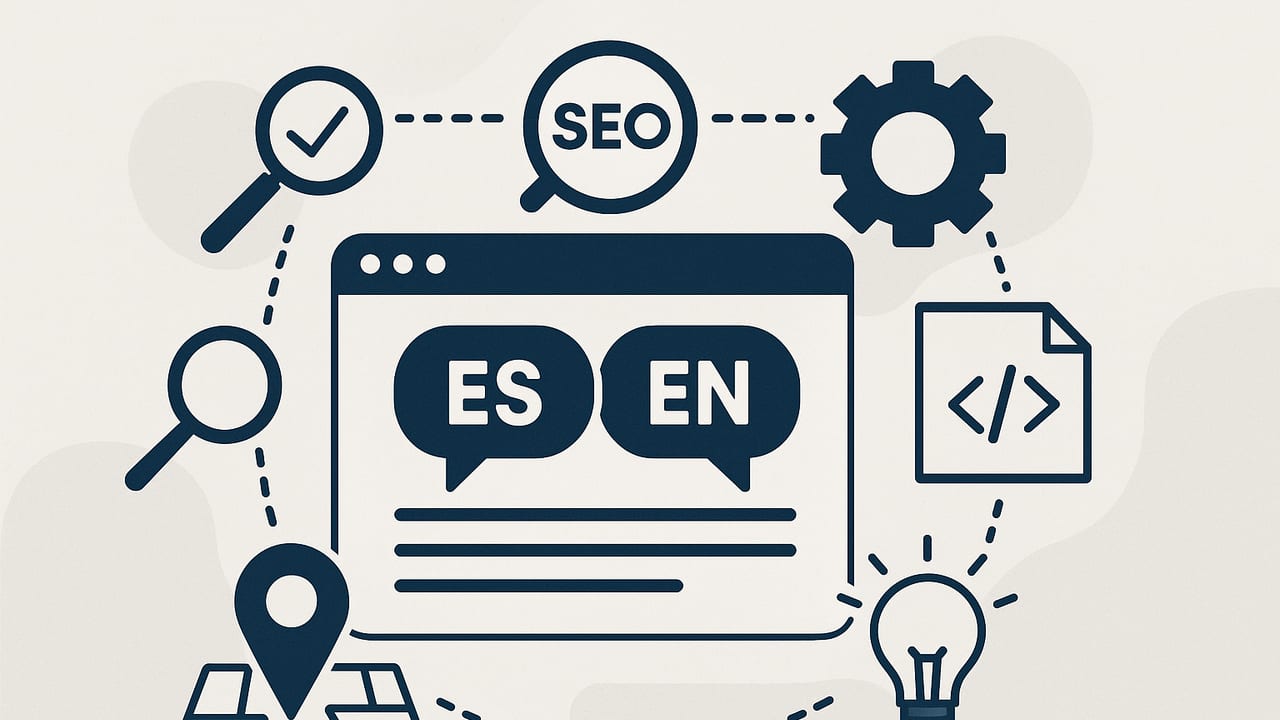
Creating effective local SEO blogs in Spanish and English helps you capture bilingual audiences searching for nearby products and services. Done right, a bilingual content strategy improves visibility in Google Search, Google Maps, and local discovery platforms while increasing conversions from both Spanish‑ and English‑speaking customers. This guide gives you a practical, technical, and editorial playbook you can apply to any local business blog.
Why Bilingual Local SEO Content Matters
In many cities, a large percentage of residents search in Spanish for local services (plumber, dentist, injury attorney, daycare) while the same neighborhoods also search in English. If you only publish in one language, you leave money on the table, reduce brand trust with multilingual customers, and distort your market analytics. Publishing local SEO blogs in Spanish and English addresses both demand segments, reinforces your Google Business Profile (GBP) presence with helpful content, and improves topical authority for local queries.
- Higher local visibility: Rank for dual-language near-me and geo-modified queries.
- Better engagement: Customers find content that matches language preference and cultural context.
- Stronger SEO signals: More internal links to location pages, richer topical clusters, and better E-E-A-T indicators.
Strategy Overview: Map Audience, Locations, and Clusters
Start with a clear content architecture tied to your service areas and buyer intent:
- Define locations: City, neighborhood, and county priorities; map Spanish-speaking concentration by ZIP if available.
- Segment intent: Informational (how-to, cost, comparisons), commercial (services, types, pricing), and transactional (booking, phone calls, directions).
- Build clusters: For each service and location, plan English and Spanish posts that interlink to the core location/service pages.
Example cluster for a Miami plumber: a main service page (plumbing in Miami) plus bilingual blog posts on seasonal tips, emergency checklists, cost breakdowns, water-pressure issues in older buildings, and Spanish/English FAQs. Each post links to the Miami plumbing page and the GBP landing page.
Keyword Research for English and Spanish (With Local Nuance)
The big mistake is translating keywords literally and missing how people actually search in Spanish. Instead:
- Collect seed terms in both languages: "plumber near me," "emergency plumber Miami," plus "plomero de emergencia Miami," "plomero cerca de mí."
- Localize variants: In some countries/regions Spanish uses plomero (Mexico, parts of the US) vs. fontanero (Spain). For attorneys, abogado is standard, but practice names vary; for roofing, techos vs. tejados depends on locale.
- Use location modifiers: City names, neighborhoods, landmarks, and ZIPs in both languages.
- Analyze SERPs separately: Spanish results often include different People Also Ask questions, local directories, and intent patterns.
- Check seasonality: Spanish queries may spike around community events or holidays; adapt your calendar.
Tools and methods:
- Google Keyword Planner, Search Console, and Trends with language filters and location targeting.
- Manual SERP inspections using Spanish language settings and a local IP (or location setting).
- GBP "Searches used to find your business" to uncover live bilingual demand.
Intent Differences: English vs. Spanish Examples
| Topic | English Query | Spanish Query | Notes |
|---|---|---|---|
| Plumber | emergency plumber Miami | plomero de emergencia Miami | Consider "fontanero" for Spain; US communities usually prefer "plomero". |
| Dentist | best dentist near me | mejor dentista cerca de mí | Include accents and questions like "¿Cuánto cuesta una limpieza dental?" |
| Personal injury lawyer | car accident lawyer Houston | abogado de accidentes de auto Houston | Also target "abogado de lesiones personales" variants. |
| Roofing | roof repair Orlando | reparación de techos Orlando | Spanish results often feature cost FAQs; add pricing ranges and materials. |
Site Architecture: URL Structure and Hreflang
Keep the site architecture simple and scalable:
- Use subfolders for language:
/en/or root for English;/es/for Spanish. Example:/miami/plumbing/and/es/miami/plomeria/. - Mirror architecture: Each English blog has a Spanish counterpart with localized slug, meta, and content—not just translated.
- Implement hreflang: Help Google serve the right language version in each market.
Sample hreflang tags for a blog post pair:
<link rel="alternate" href="https://example.com/miami/plumbing-emergency-checklist/" hreflang="en" />
<link rel="alternate" href="https://example.com/es/miami/lista-de-emergencia-plomeria/" hreflang="es" />
<link rel="alternate" href="https://example.com/miami/plumbing-emergency-checklist/" hreflang="x-default" />
Best practices:
- Match one-to-one equivalents across languages.
- Use localized slugs with safe characters; avoid removing necessary accents in on-page headings but keep slugs URL-safe.
- Ensure canonical and hreflang point to correct equivalents (no chains).
On-Page Optimization: Dual-Language Details That Matter
- Titles and meta: Write unique, compelling copies per language; keep within pixel limits. Example: EN "Emergency Plumbing in Miami: DIY Steps Before You Call"; ES "Plomería de Emergencia en Miami: Pasos Antes de Llamar".
- Headings: Reflect localized phrasing; match user vocabulary (plomero vs. fontanero).
- Media: Alt text localized. Example: ES "plomero reparando fuga en Miami".
- Internal links: Cross-link posts within each language and point prominently to the relevant location/service page.
- CTAs: Language-appropriate phone formats, WhatsApp options where relevant, and bilingual forms.
- FAQ schema: Localize questions; maintain separate markup per language page.
Local SEO Essentials Your Blog Should Support
Your blog should feed authority and relevance to local assets:
- Google Business Profile: Link your GBP website URL to a strong, localized landing page, and reference helpful blog posts from GBP posts.
- NAP consistency: Ensure Name, Address, Phone match across site footers, Spanish and English pages, and external citations.
- Citations and directories: Where Spanish directories exist in your market, list both language variants of your business description.
- LocalBusiness schema: Mark up address, geo, and contact points; complement with BlogPosting schema for each article.
Example LocalBusiness JSON-LD:
{
  "@context": "https://schema.org",
  "@type": "LocalBusiness",
  "name": "Miami Pro Plumbing",
  "image": "https://example.com/images/logo.png",
  "url": "https://example.com/",
  "telephone": "+1-305-555-0123",
  "address": {
    "@type": "PostalAddress",
    "streetAddress": "123 Biscayne Blvd",
    "addressLocality": "Miami",
    "addressRegion": "FL",
    "postalCode": "33132",
    "addressCountry": "US"
  },
  "geo": {
    "@type": "GeoCoordinates",
    "latitude": 25.7751,
    "longitude": -80.2105
  },
  "areaServed": ["Miami", "Miami Beach", "Little Havana"],
  "sameAs": [
    "https://g.page/r/your-gbp-id",
    "https://www.facebook.com/miamiproplumbing"
  ]
}
Example BlogPosting JSON-LD (per-language page):
{
  "@context": "https://schema.org",
  "@type": "BlogPosting",
  "headline": "Emergency Plumbing in Miami: DIY Steps Before You Call",
  "inLanguage": "en",
  "author": {"@type": "Person", "name": "Staff"},
  "datePublished": "2024-11-10",
  "mainEntityOfPage": {"@type": "WebPage", "@id": "https://example.com/miami/plumbing-emergency-checklist/"}
}
Create a matching Spanish page with inLanguage set to "es", Spanish headline, and Spanish URL.
Content Calendar: Bilingual Post Ideas That Win Local SERPs
Mix evergreen and timely posts, with one English and one Spanish version for each idea:
- Cost breakdowns: "How much does [service] cost in [City]?" / "¿Cuánto cuesta [servicio] en [Ciudad]?" Add ranges, factors, and local providers’ differences.
- Checklists: Seasonal maintenance, emergency steps, landlord/tenant guides.
- Neighborhood spotlights: Infrastructure quirks affecting the service (e.g., older pipes in [Neighborhood]).
- Regulations and permits: Local rules explained in plain language for homeowners or tenants.
- Comparisons: Materials, brands, or service options adapted to local climate.
- Case studies: Before/after projects and testimonials with bilingual quotes.
Editorial cadence tip: Publish at least one bilingual pair per week. Interlink posts within each language and add a short cross-language prompt ("Ver en Español" / "View in English") linking to the equivalent page.
Workflow: Translation vs. Transcreation
For local SEO, literal translation isn’t enough. Use a transcreation process:
- Draft in the dominant language for the topic or your team’s strength.
- Create a style glossary: tone, terminology (e.g., plomero vs. fontanero), and measurement units.
- Localize examples, neighborhoods, and idioms; adjust FAQs to match Spanish SERP questions.
- Have a native or fluent reviewer edit Spanish content for clarity and cultural accuracy.
- Sync updates: When you revise one language, update the counterpart and preserve hreflang links.
Quality checks: run language-specific spellcheck with accents, validate schema on each version, test mobile rendering and phone link clicks in both languages.
Measuring What Matters
- Google Search Console: Create page filters for
/es/to isolate Spanish performance. Track impressions, CTR, and top queries by language. - GA4: Build segments by page path (English vs. Spanish). Monitor engaged sessions, conversion rate, and assisted conversions.
- GBP Insights: Watch discovery searches in Spanish vs. English and clicks to website calls. Publish bilingual GBP posts linking to your newest blog articles.
- Rank tracking: Add bilingual keywords with city modifiers; check map pack and organic rankings separately.
KPIs to benchmark: total clicks by language, conversions by language, average position for top 20 bilingual targets, and the percentage of posts that reach top 10 in local SERPs within 90 days.
Common Pitfalls (and Fixes)
- One-language cannibalization: English page ranks but Spanish doesn’t exist. Fix: create the Spanish counterpart and add hreflang.
- Literal translations: Low CTR from awkward titles. Fix: rewrite with native phrasing and localized value props.
- Mixed-language pages: English CTAs on Spanish posts. Fix: keep language consistency per page, including menus and forms when possible.
- No internal links to GBP landing page: Fix: Add contextual links and a clear CTA block on each article.
- Ignoring accents in metadata: Fix: use correct accents in titles/meta; keep URL slugs readable and safe.
Fast Start: Sample Bilingual Blog Outlines
English: "Roof Leak Repair in Orlando: Costs, Timelines, and DIY Triage"
- Intro: Urgency and when to call a pro
- Quick triage steps (safety first)
- Cost ranges by roof type and damage
- Timeline: emergency vs. scheduled repairs
- Neighborhood considerations (storms, building age)
- CTA + internal links: Orlando roofing page, related posts
Español: "Reparación de Filtraciones de Techo en Orlando: Costos y Pasos Rápidos"
- Introducción: urgencia y cuándo llamar a un profesional
- Pasos rápidos de emergencia (seguridad)
- Rangos de costos por tipo de techo y daño
- Tiempos: urgentes vs. programados
- Consideraciones por vecindario (tormentas, edad de edificaciones)
- Llamado a la acción + enlaces internos: página de techos en Orlando y artículos relacionados
FAQ: Bilingual Local SEO
Q1: Do I need separate Spanish and English pages?
Yes. Create distinct URLs per language, each with localized copy, metadata, schema, and hreflang links to its counterpart.
Q2: Should I translate old English posts into Spanish?
Prioritize high-intent, high-traffic English posts and those tied to profitable services/locations. Localize them fully rather than translating literally.
Q3: How many Spanish posts should I publish?
Aim for parity with English on core topics. A good baseline is one new bilingual pair weekly, then scale based on demand and ROI.
Final Thought
Building authoritative local SEO blogs in Spanish and English isn’t just translation—it’s audience research, technical SEO, and cultural precision working together. If you want to automate parts of the process (keyword research, bilingual drafts, and scheduled publishing) while keeping editorial control, platforms like the24blog can help streamline your workflow.