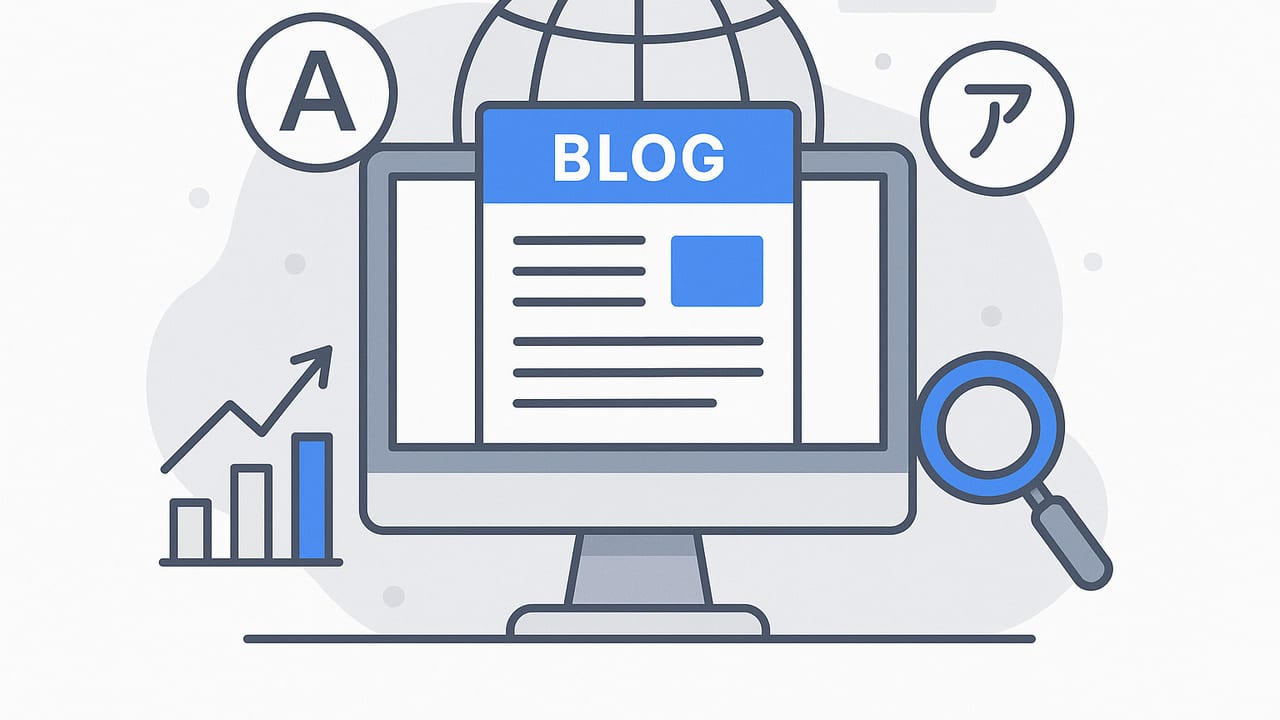
Reaching readers across borders takes more than translating your latest article. To win organic traffic globally in 2025, your plan for multilingual blog posts must combine market selection, localized keyword research, technical SEO (like hreflang), and a scalable content workflow. This guide breaks down exactly how to build an international content engine that earns rankings, backlinks, and revenue—without creating a maintenance burden.
Why multilingual blog posts matter in 2025
Search behavior has never been more local. Even as AI summaries expand, users still prefer content in their language, tuned to their cultural context and intent. Brands that publish consistent, high-quality multilingual blog posts tend to see compounding gains: more impressions across SERPs, higher click-through rates, and stronger trust signals from local backlinks and engagement.
Additionally, privacy and regional platforms shape discoverability. Consider country-specific engines (e.g., Naver, Baidu), regulations (GDPR, LGPD), and local social networks where content circulates. A multilingual strategy reduces reliance on a single market or algorithm change and creates durable, diversified growth.
A 2025 strategy for multilingual blog posts
Start with focus. It’s better to dominate a few markets than publish thin content in many. Pick 2–3 languages based on your total addressable market, organic opportunity, and your team’s localization capacity. Align topics with high-intent journeys in each region, not just translated versions of English posts.
- Identify business goals per market: brand awareness, leads, trials, or direct sales.
- Map content to the funnel: educational problem posts, solution comparisons, and decision guides.
- Use local seasonality and events (holidays, regulations, conferences) to shape your editorial calendar.
Keyword research for each language and region
Never translate keywords blindly. Search intent varies by language and country—even for the same term. Build separate keyword sets for Spanish (Spain) vs Spanish (Mexico), German (Germany) vs German (Switzerland), etc.
- Use regional sources: Google Keyword Planner with location filters, Search Console per property, and local SERP scrapes. Supplement with marketplaces and forums in the target language.
- Analyze SERP intent: are top results product pages, tutorials, listicles, or news? Mirror the dominant format with a better experience.
- Cluster keywords by topic and intent. Create pillar pages that internally link to detailed posts in that language.
- Localize modifiers: alternatives, pricing, nearby, best for [profession], [region] 2025, country-specific acronyms.
Information architecture and domain choices
Your URL strategy affects indexation and authority flow. Choose a structure that is easy to manage and clear for search engines.
- Subdirectories (example.com/es/): concentrate authority on one domain, simplest for most teams.
- Subdomains (es.example.com): acceptable, but often slower to consolidate authority.
- ccTLDs (example.es): strongest geo signal, higher operational overhead.
Keep slugs short, localized, and consistent. Ensure breadcrumbs, nav labels, and sitemap paths are translated. Implement a language switcher that preserves the page context (switching en/post to es/post), not just the homepage.
Localization vs translation vs transcreation
Not all content needs the same depth of adaptation. Match your approach to the page’s business impact and the market’s maturity.
| Approach | Best for | Pros | Watch-outs |
|---|---|---|---|
| Translation | Low-risk updates, utility docs | Fast, cost-effective | May miss intent, idioms, or SERP format |
| Localization | Evergreen posts, product guides | Adapts units, tone, examples | Requires native review and style consistency |
| Transcreation | High-value pages, campaigns | Reimagines content for cultural fit | Longest turnaround, higher cost |
On-page and technical SEO for multilingual blog posts
- Title/Meta: write unique titles and meta descriptions per language; avoid literal translations. Include localized primary keywords and natural modifiers.
- Headings: mirror the winning SERP structure in that locale (e.g., listicles with numbered H2s if that’s dominant).
- Media: use localized screenshots and captions; compress images and serve next-gen formats for Core Web Vitals.
- Structured Data: mark up Article with inLanguage, author, and headline per version.
- Internal Links: keep language-consistent linking; avoid mixing languages in anchor text unless relevant brand terms demand it.
Implement hreflang to help search engines serve the right language/regional version and reduce duplicate content confusion. Add reciprocal tags across all alternates, including x-default for a global fallback.
<link rel="alternate" hreflang="en" href="https://example.com/en/post" />
<link rel="alternate" hreflang="es" href="https://example.com/es/post" />
<link rel="alternate" hreflang="es-mx" href="https://example.com/es-mx/post" />
<link rel="alternate" hreflang="de" href="https://example.com/de/post" />
<link rel="alternate" hreflang="x-default" href="https://example.com/" />
Alternatively, place hreflang in your XML sitemaps if template-level injection is complex. Ensure canonical tags point to the self-language version, not cross-language pages. Finally, configure separate Search Console properties per subdirectory/subdomain to see language-specific queries and indexing health.
Content operations and AI-assisted workflow
Scaling multilingual blog posts requires a repeatable, quality-controlled workflow. Combine human oversight with AI acceleration to hit consistency and speed targets without sacrificing accuracy.
- Briefing: for each market, define the search intent, target queries, SERP structure, outline, examples, and CTA. Include local sources and compliance notes.
- Terminology: maintain a multilingual glossary and style guide (formal vs informal tone, units, date formats, forbidden claims).
- Drafting: use AI to create first drafts per language, seeded with the brief and glossary. Ask for multiple headline variants and meta descriptions.
- Localization pass: native linguists or market specialists adapt idioms, examples, and add local data points.
- SEO QA: check headings, internal links, schema, image alts, and hreflang reciprocity. Validate Core Web Vitals in lab and field data.
- Editorial QA: fact-check, apply brand voice, and run sensitivity reviews for cultural nuances.
- Publish and iterate: schedule updates based on performance signals and seasonal interest.
Translate intent, not just words. Local SERPs tell you the content format, depth, and angle to win.
Sample brief (condensed): audience persona, main query cluster (ES-MX), competing URLs and gaps, outline with H2/H3, local examples, internal link targets, primary/secondary CTAs, and compliance notes (e.g., pricing claims).
Promotion and link earning per market
- Localize outreach: pitch region-specific journalists, bloggers, and associations with a localized email and value proposition.
- Community channels: country-specific Slack/Discord groups, WhatsApp/Line/KakaoTalk communities where applicable.
- Digital PR hooks: data studies using local statistics, quote banks from regional experts, and timely angles tied to local events.
- Repurpose content into localized infographics, carousels, and short videos for social discovery.
Measure what matters: KPIs for multilingual blogging
- Visibility: impressions and average position per language/region in Search Console.
- Engagement quality: local CTR, scroll depth, time on page, return visits, and assisted conversions.
- Acquisition efficiency: new users, non-brand traffic share, and cost per session by market.
- Business impact: conversions (demo, trial, purchase), pipeline influenced, and revenue attribution by locale.
- Content health: index coverage, duplicate clusters resolved via hreflang, and update cadence for top posts.
Set market-level performance targets and review monthly. Use annotation of content releases and algorithm updates to separate correlation from causation.
Common mistakes to avoid
- Translating keywords literally and missing local intent.
- Mixing languages on a single page or in navigation labels.
- Missing reciprocal hreflang tags or canonical conflicts.
- Publishing without native editorial review.
- Ignoring regional compliance and cultural sensitivities.
Quick checklist
- Market selection: 2–3 high-priority languages with clear goals.
- Localized keyword clusters and SERP-driven outlines.
- Subdirectory or ccTLD structure selected and documented.
- Unique titles, metas, headings, and media per language.
- Hreflang implemented and validated; Search Console properties set.
- Glossary, style guide, and AI-assisted draft pipeline in place.
- Local promotion plan and KPI dashboard per market.
Final thoughts
Multilingual blog posts pay off when you pair technical precision with cultural resonance and a sustainable workflow. Start focused, prove ROI, then expand. If you’re exploring hands-free automation to operationalize this playbook, platforms like the24blog can help you publish consistently across languages while staying aligned with SEO best practices.